
UMM AL-MU’MININ SAYYIDAH KHADIJAH RADIYA LLAHU ‘ANHA
April 30, 2026Shattering the Mirage: A Response to ‘Abdul Hussain Sharaf al Din’s al Muraja’at: Letter 105 and 106
May 19, 2026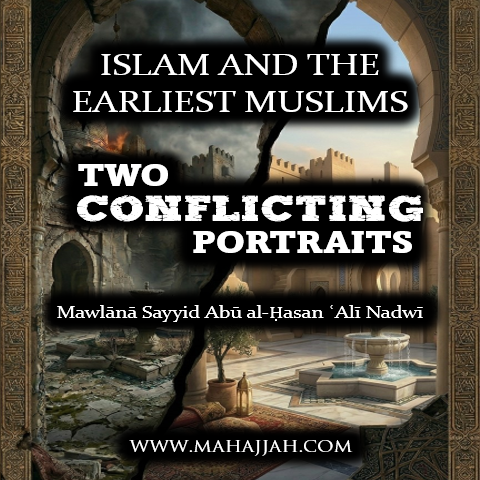
This slim volume is neither meant to demonstrate soundness of any particular creed, system of belief, or school of thought nor is this a polemical or scholastic effort to refute the beliefs of any sect. This work may prove disappointing to those who go through it with a view to find such matters discussed in it. There are innumerable works on the subject, especially in languages spoken by the Muslims, such as Arabic, Persian, and Urdu; so large is their number that it is not possible to touch upon them even briefly.
This work seeks to present a sketch of the earliest, ideal era of Islam: the period of the Messenger salla Llahu ‘alayhi wa sallam and his Sahabah, the new mode of thought and feelings Islam had produced, all of which was the result of the Messengerʼs salla Llahu ‘alayhi wa sallam teachings and guidance. It shows how the guidance provided by the Messenger salla Llahu ‘alayhi wa sallam differed and surpassed the endeavours of all previous reformers and founders of religions. The first Islamic society that came to existence solely through the efforts of the Messenger salla Llahu ‘alayhi wa sallam has been presented through the light of verifiable facts of history. The book brings out the divine scheme for the protection of the Qurʼan against every form of corruption, since it was destined to remain the last revelation from Allah for the guidance of humanity. It also highlights the basic difference in the policy pursued by the harbingers of revolution and founders of empires for perpetuation of dynastic rule, on the one hand, and the prophetic system and disposition, on the other, essential for bringing man to the threshold of Allah. This distinction is also illustrated by the behaviour, character, and morals of the Messengerʼs salla Llahu ‘alayhi wa sallam household. The matters discussed in this connection bring into relief the need as well as the importance of the Messenger salla Llahu ‘alayhi wa sallam himself being the ultimate authority in every matter pertaining to creed and law from the inception of the prophetic mission to the end of time—the essentiality of the doctrine of Khatm al Nubuwwah (the Finality of Nubuwwah).
This doctrine upheld through the consensus of the Ahlus Sunnah wa al Jama’ah, uniformly and continuously, and the way it has been perceptible throughout the lifetime of the Messenger salla Llahu ‘alayhi wa sallam and in subsequent ages, has been set side by side with the beliefs and deeds of the Ithna ‘Ashariyyah sect of the Shia (from its first protagonist to Ayatollah Khomeini) as presented in the authentic works of their eminent theologians. It has been left to the discretion—common sense, prudence, and better judgement—of the readers to form their own opinion as to which of the two portrayals is upheld by the Qurʼan as well as accepted by the historians, Muslim and non-Muslim. It has been left to the judgement of the readers to decide which of the two presentations of Islam befits the Nabi who was undoubtedly the most successful prophet of Allah and the greatest guide and reformer the world has ever seen. They can decide which of the two versions is consistent with the claim of a religion to show the path of godliness and virtue to all races and nations in every time and clime, to make man loving, kind-hearted, and self-sacrificing, and to raise him to the highest reaches of humanness from the level of animalism.
Sayed Abu al Hasan ‘Ali Nadwi
Lucknow
19 Safar 1405 AH
14 November 1984 CE
Islam and the Earliest Muslims Two Conflicting Portraits
by: Mawlana Sayed Abu al Hasan ‘Ali Nadwi
Click one of the sections below:
Prerequisites for Universal faith
Prerequisite One: Miraculous Guidance
Success of Prophetic Guidance
Ambiya and Political Strategists
Pure and Simple Scripture
Fount of Guidance
Miraculous moulding of Hearts.
The Soul shining through its Crystal-covering.
Khalifah ‘Ali’s Testimony
Attestation by European Scholars
Testimony of a Shi’i Scholar
Khalifah ‘Uthman ibn ‘Affan
Khalifah ‘Ali ibn Abi Talib
Puritanical Life of the earlier Khulafa
Integrity of Abu Bakr.
Khalifah ‘Umar’s journey to Syria
`Ali and His Predecessors
Sahabah and the Ahlul Bayt.
Heavenly Social Order.
The Picture painted by the Shia
Pronouncements of ‘Allamah Khomeini
Impressions of Muhsin-al-Mulk
Observation of Imam Sha’bi
Shia Presumption
Prerequisite Two: Ambiyaʼ Are Not Political Strategists
Rasulullah’s salla Llahu `alayhi wa sallam attitude towards his Household
The Last to receive any favour
Key to Salvation
Order of Khilafah
Prerequisite Three: Pure and Simple Scripture
Accuracy and preservation of the Qur’an
Testimony of non-Muslim Scholars
Shia Creed in regard to the Qur’an
Indifference to the Qur’an
An Eye-opener to Deniers of the Qur’an
Prerequisite Four: Fount of Guidance
The Doctrine of Imamah
Iranian Influence
Faith in Imam al-Gha’ib
‘Allamah Khomeini’s views about the A’immah
A Beatific Vision of Shah Wali Allah
The Glorious Lamp of Heaven
Eulogistic Poetry
Approbation or Denunciation
Character of ‘Ali and his Progeny
Contradictory Pictures of Early Islamic Era
Shia creed of ‘Allamah Khomeini
Followers of ‘Allamah Khomeini
Significance of Creed in Islam
The Secret of Khomeini’s Success